

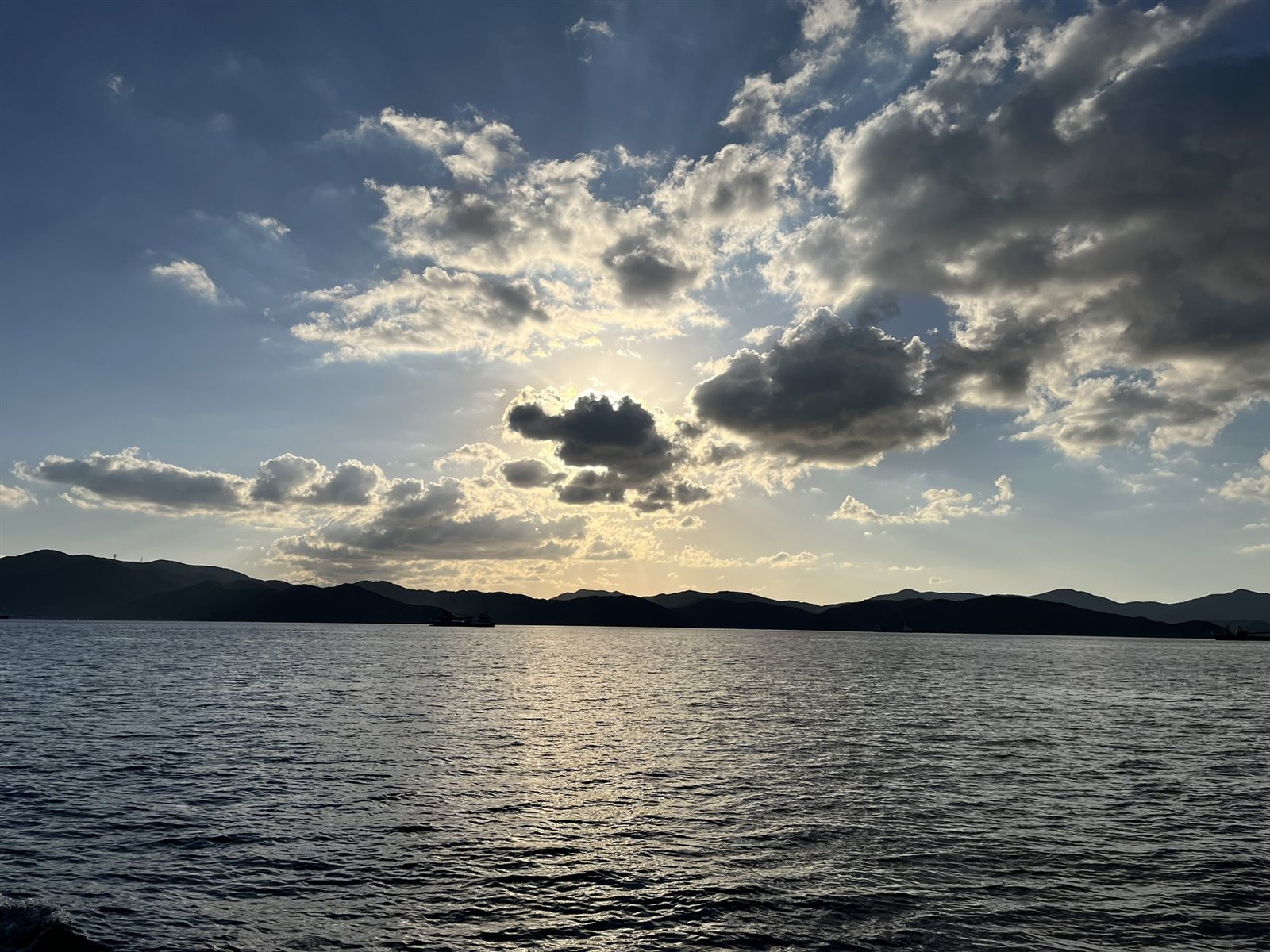
Ikenma (生間) is a village on the east side of Kakeroma Island (加計呂麻島), facing the Oshima Strait.
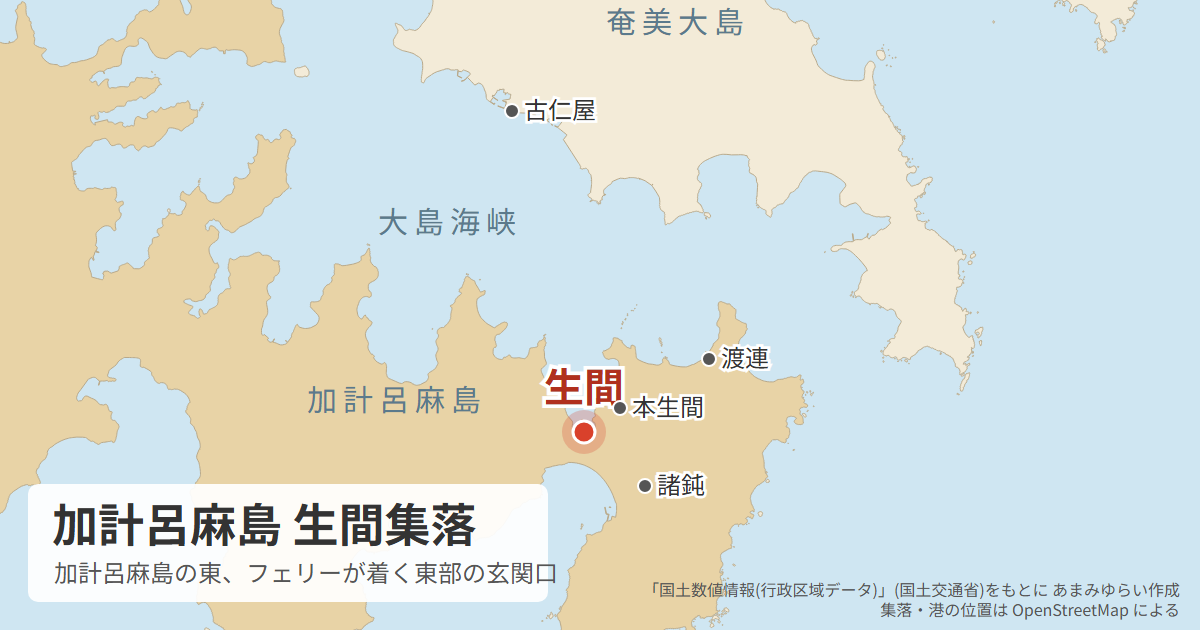
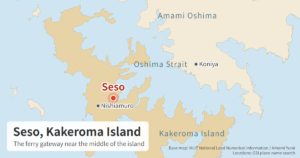
When you cross the strait on the Ferry Kakeroma from Koniya (古仁屋) in the south of Amami Oshima, you reach Ikenma Port in about 20 minutes. From the port, buses run through the villages on the east of the island to Seso (瀬相), and to Tokuhama (徳浜).
Ikenma is more than the front door to the east of Kakeroma Island. It is a village where the legend of a mother and daughter, sung in the island song “Muchakana” (むちゃ加那), overlaps with the much older time of pottery shards left by the shore.
East Kakeroma: the port area and Hon-Ikenma
Ikenma is one of the villages of Kakeroma Island, which belongs to Setouchi Town. It lies on the northeast side of the island and faces Koniya on Amami Oshima across the Oshima Strait.
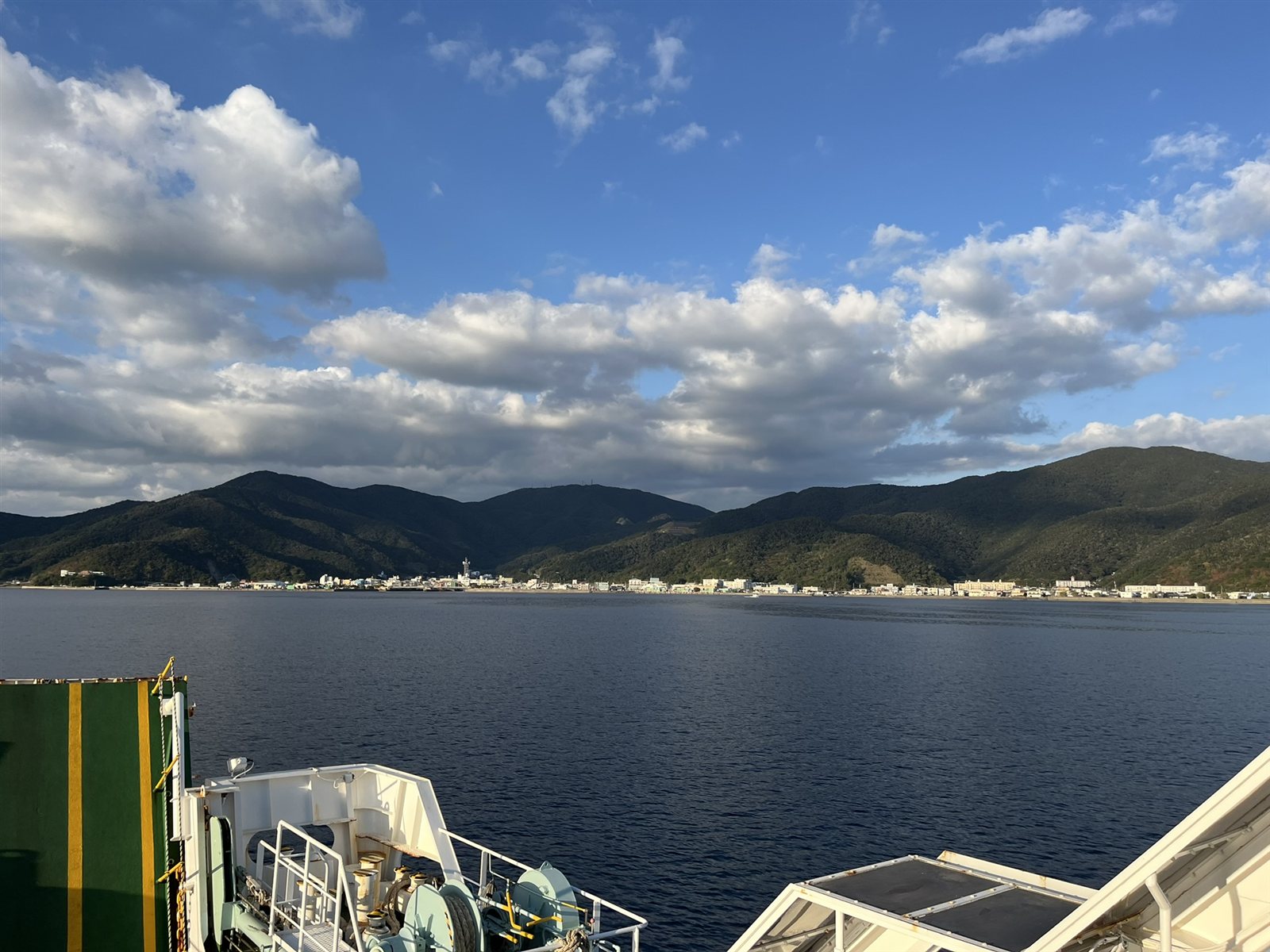
The houses of Ikenma are split between the area around the port where the ferry arrives and Hon-Ikenma (本生間), a cove a little to the east of the port. Around the port there is a ferry waiting room and a gas station, and Kakeroma Bus has two stops here: “Ikenma” at the port and “Hon-Ikenma” to the east.
Hon-Ikenma is surrounded by mountains on three sides: north, east and south. To the west is a cove with a sandy beach, and the houses stand on the seaward side of the flat land that stretches from the beach to the foot of the mountains.
From 1916 until they became part of Setouchi Town in 1956, the villages on the east side of Kakeroma Island belonged to Chinzei Village (鎮西村). In the Edo period, when the Satsuma domain divided up the area, this part of the island was called “Doren-ho” (渡連方), after the name of the neighboring village.
In the 2020 national census, the Ikenma district had a population of 56 in 31 households.
Ikenma Port, the front door to the east of the island
The municipal Ferry Kakeroma, which links Koniya Port with Kakeroma Island, calls at two ports on the island: Seso and Ikenma. Three of the seven sailings a day go to Ikenma Port, and the trip from Koniya takes about 20 minutes. Sea taxis also arrive at Ikenma Port.
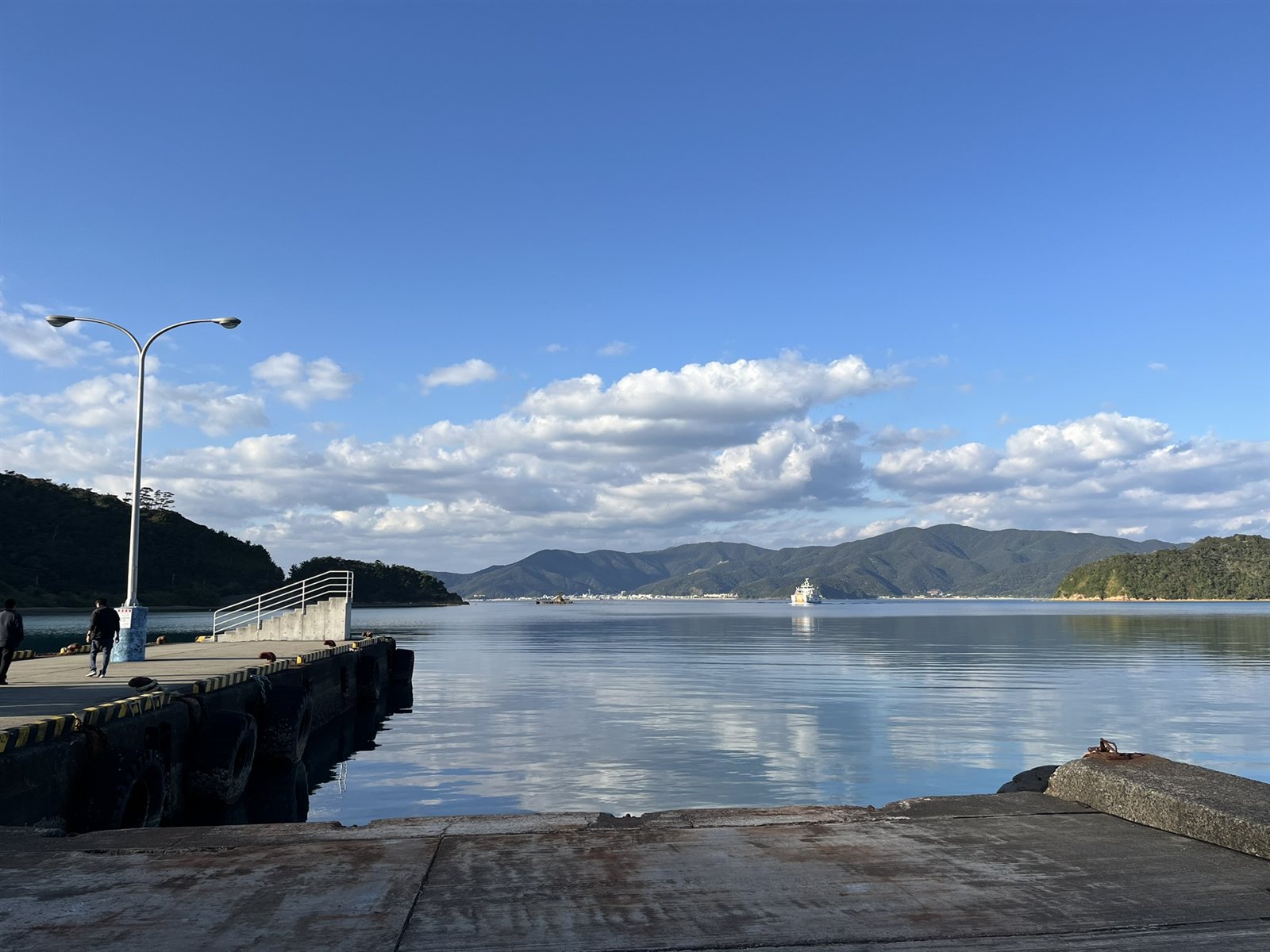
The Ikenma waiting room is described as “the front door to the east of Kakeroma Island.” It is a small port, but a convenient starting point for Surihama (スリ浜), Doren (渡連), Ankyaba (安脚場), Tokuhama and Shodon (諸鈍).
From Ikenma Port, Kakeroma Bus runs a route to Seso via Akitoku (秋徳) and a route to Seso via Oshikaku (押角). Tokuhama is served by an “on-demand” route. On the day we visited in January 2025, a Kakeroma Bus was already waiting at the port a little before the ferry arrived.
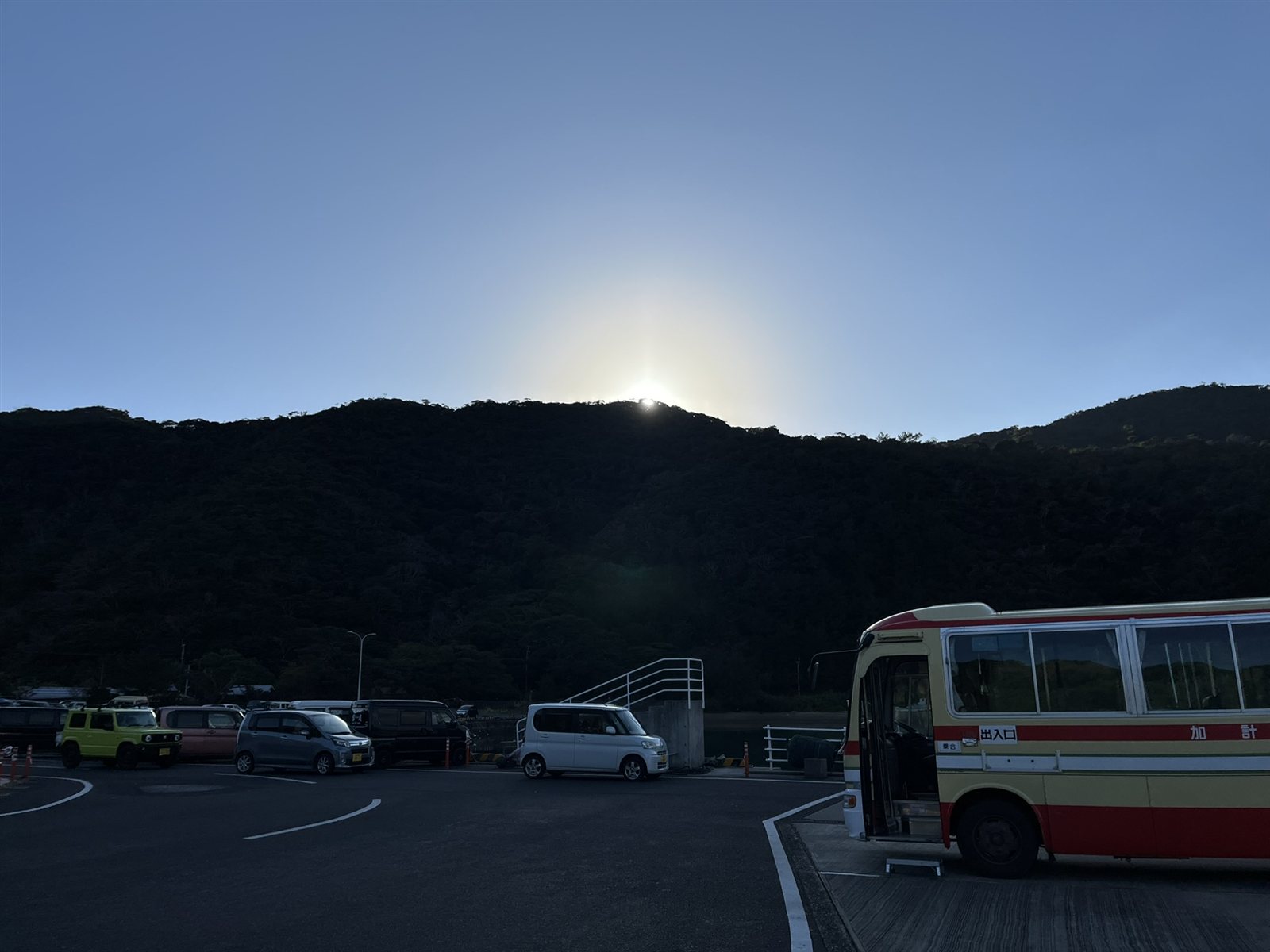
Transport on the island is still changing. From November 9, 2026 to January 11 the following year, the town plans a trial of “public ride-sharing” on Kakeroma Island, a paid pick-up service using private cars. It is meant to fill the hours when no buses run, and is to be based in the two districts where the ferry calls, Seso and Ikenma.
Ikenma Port is also where boats carrying the sick arrive. The town’s emergency boat “Otori” (おおとり), which carries emergency patients from Kakeroma Island and elsewhere, is on standby 24 hours a day at Sekui Port (瀬久井港) in Koniya. It takes about 6 minutes one way from Sekui Port to Ikenma Port.
In the past, both the way to the port and the time it took to cross the sea were different. According to a woman who was born in Ikenma and later married into Shodon, it was a 30-minute walk over a steep mountain path from Shodon to Ikenma. After the war, the trip from Ikenma to Koniya took more than 30 minutes on a small motorboat that ran once a day.
Old pottery shards on the flat land of Hon-Ikenma
Old pottery shards have been found on the west side of the houses of Hon-Ikenma. The town’s board of education has recorded this place as the “Ikenma Mita Site” (生間ミタ遺跡).
The finds include Kamuiyaki (カムィヤキ), pottery fired on Tokunoshima Island, as well as celadon and ceramics made on mainland Japan. Among the Kamuiyaki are a shard thought to be the handle of a jar or pot and shards of a jar with a wave-like pattern on the outside. They are of a thin-walled type and are dated to between the late 11th century and the early 13th century.
The site lies on the same flat land as the houses of Hon-Ikenma and is thought to spread to the west of them. It is dated to the period from what is called the “Gusuku period” in Amami to the time of Satsuma rule.
The shards left on the flat land by the cove of Hon-Ikenma tell us that, long before the present village took shape, people here were using pottery that had come across the sea.
The island song “Muchakana” and Uratomi’s home
Ikenma is known as the place where the story of a mother and daughter, sung in the Amami island song “Muchakana,” begins.
The legend as compiled by the Setouchi Town Library goes like this. In the days of Satsuma rule, there was a young woman in Ikenma named Uratomi (ウラトミ), praised as the most beautiful woman on the island. When a Satsuma official demanded that she become his mistress, Uratomi firmly refused. The angry official imposed heavy taxes not only on Uratomi’s family but on the whole of Ikenma. Torn between love for their daughter and guilt toward their neighbors, her parents had no choice but to put her in a small boat and set her adrift. A few days later the boat washed ashore at Onotsu (小野津) on Kikai Island (喜界島), where Uratomi married a local man and had a child. But her daughter, Muchakana, grew up to be even more beautiful than her mother, and drew the jealousy of the other women, who pushed her into the sea. She died at 16. It is said that when Uratomi heard of this, she followed her daughter in death.
This story has been sung across the islands. Monuments also stand at Aoku (青久) in Sumiyo, Amami City, on Amami Oshima, where Muchakana’s body is said to have washed ashore, and at Onotsu on Kikai Island.
As the song was passed down, details of the story came to differ from place to place and from record to record. In a book from 1927, the daughter is named Muchakana and the family flees to Kikai Island together; in a book from 1933, the daughter is named Uratomi and the song is called “Uratomi-bushi.” In Ikenma there is also a version in which it was Muchakana who fled from Ikenma; after she lost her life on Kikai Island, her body washed ashore at Sumiyo, and she was brought back to Ikenma and enshrined, which was the beginning of the “Gongen” (権現) shrine.
A monument to the song “Muchakana-bushi” stands on a hill on the cape on the east side of Ikenma. In 1990, a local singer won first place at a national Japanese folk song contest with this song, and the town later built the monument. The site of the monument is also called Muchakana Shrine. Villagers are said to still clean it and pray there every month on the 9th day of the lunar calendar.
Shells on gateposts and a great pine tree
In Ikenma, prayer is also part of everyday life.
On Kakeroma Island, shells such as the suijigai and kumogai (both spider conchs) are sometimes placed on top of the gateposts of houses to ward off evil. A 2013 town bulletin notes that a shell called gohoura is sometimes among them, and shows a photo of a gatepost at a house in Ikenma as an example.
Records of interviews that university students carried out in Amami say that Ikenma has a great pine tree, and that the area around it has been regarded as a sacred mountain, a “Kamiyama.” The pine tree is said to be home to a god, and the trees around it were not to be cut.
Shops and places to stay near the port
Around Ikenma Port there are a gas station and car rental shops, so you can get ready here before exploring the island. There are not many shops or places to stay, so it is a good idea to check where you will eat and sleep in advance. Opening days and hours may change, so please check before you go.
- Curry Haruku (カレー 晴空, curry restaurant, reservations required; closed in winter, irregular holidays in other seasons): 090-8980-3931
- Kazu no Yume (和の夢, accommodation): 0997-76-0231
- Umigame Rent-a-Car (at Ikenma Port, next to the gas station): 090-9729-3654
- South Sea Service (car rental, paperwork at Ikenma Port): 080-6411-6581
- Kakeroma gas station (ENEOS, at Ikenma Port): 0997-76-0720
- Ferry Kakeroma, Ikenma waiting room: 0997-76-0619
Phone numbers are shown in the format used within Japan. When calling from outside Japan, dial +81 and drop the first 0.
When you visit
- Ikenma is a place where islanders come and go by ferry and bus every day. Around the port, please be careful where you park and walk
- The hill with the song monument is a place villagers still clean and pray at. Please visit quietly
- Kakeroma Bus leaves soon after the ferry arrives. It helps to decide where you are going before you reach the port. For how to ride the on-demand service to Tokuhama, check with Kakeroma Bus
- The last ferry back to Koniya leaves Ikenma Port earlier than the last one from Seso Port. Check your return sailing in advance
- On mountain paths and in long grass, watch out for habu (venomous snakes)
- There are toilets near Ikenma Port
Ikenma timeline
- Late 11th to early 13th century: Kamuiyaki later found on the flat land of Hon-Ikenma is made (Ikenma Mita Site)
- 1720: The Satsuma domain divides up the Setouchi area, and the east side of Kakeroma Island becomes “Doren-ho”
- 1908: The villages of Kakeroma Island become Chinzei Village
- 1916: Saneku Village separates from Chinzei Village. Ikenma remains in Chinzei Village
- 1927 and 1933: The story of “Muchakana” is recorded in books (the daughter’s name and the song title differ between them)
- 1956: Koniya Town and the villages of Nishikata, Chinzei and Saneku merge to form Setouchi Town
- 1990: A local singer wins first place at a national Japanese folk song contest with “Muchakana.” The town later builds a song monument in Ikenma
- 2020: The Ikenma district has a population of 56 in 31 households (national census)
- 2026: A public ride-sharing trial based in Ikenma and Seso is planned to start in November
Memories of song and pottery at the eastern front door
About 20 minutes from Koniya, the front door to the east of Kakeroma Island, where buses set out for the villages of the east.
Pottery shards from the 11th to 13th centuries, found on the flat land by the cove of Hon-Ikenma.
The story of Uratomi and Muchakana, sung across the sea to Kikai Island and to Aoku, and the monument on the hill.
And the shells on the gateposts, and the pine tree said to be home to a god.
Most people who arrive at Ikenma Port head straight on to Shodon or Tokuhama by bus or car. But if you walk a little way from the port to the cove of Hon-Ikenma or the hill on the cape, you find a village where its present as the island’s eastern front door, the distant past told by pottery shards, and the story of a mother and daughter sung across the sea all overlap on one shore.
To reach Kakeroma Island, take the Ferry Kakeroma from Koniya in the south of Amami Oshima to Ikenma Port. Timetable and fares:
Ferry Kakeroma Timetable and Fares | Koniya ⇔ Kakeroma Island (Seso / Ikenma)
Bus routes from Ikenma Port to villages around the island:
Kakeroma Island Bus Timetables and Fares | 6 Routes and Ferry Connections
Shodon, a short bus or car ride from Ikenma Port:
Shodon: coral tree avenue, Heike legends and the Shibaya folk play
Tokuhama, over the mountains by bus from Ikenma Port (in Japanese):
Ankyaba, further east from Ikenma Port (in Japanese):


Comments