

When people think of food on Amami Oshima, the first dish that comes to mind is keihan (鶏飯), chicken and rice with hot broth. But keihan is not the only thing that island websites and shops call “soul food.”
This article starts with the dishes and drinks most often introduced as soul food, then goes on, scene by scene, through food for festivals and New Year’s Eve, side dishes for rice, and the island flavors you meet at izakaya in the evening. Use it when you are on the island and wondering what to eat.
Information checked: October 8, 2026 (sources are listed at the end of this article)
Start with these three
| Name | What it is | Where you are likely to find it |
|---|---|---|
| Keihan | Toppings on rice, with chicken broth poured over | At lunchtime in specialty restaurants and diners |
| Abura somen | Somen noodles stir-fried with other ingredients and finished with dashi stock | A home dish, also at diners and izakaya |
| Miki | A fermented drink made from rice, sweet potato and other ingredients | Sold in cartons by makers on the island |
Keihan (鶏飯)
Amami’s signature local dish: chicken, thin strips of egg, shiitake mushrooms, pickled papaya and other toppings on rice, with chicken broth poured over. It is said to have begun as a dish for entertaining officials of the Satsuma Domain (薩摩藩). A typical way to enjoy it is to take a small amount of rice and have several helpings.
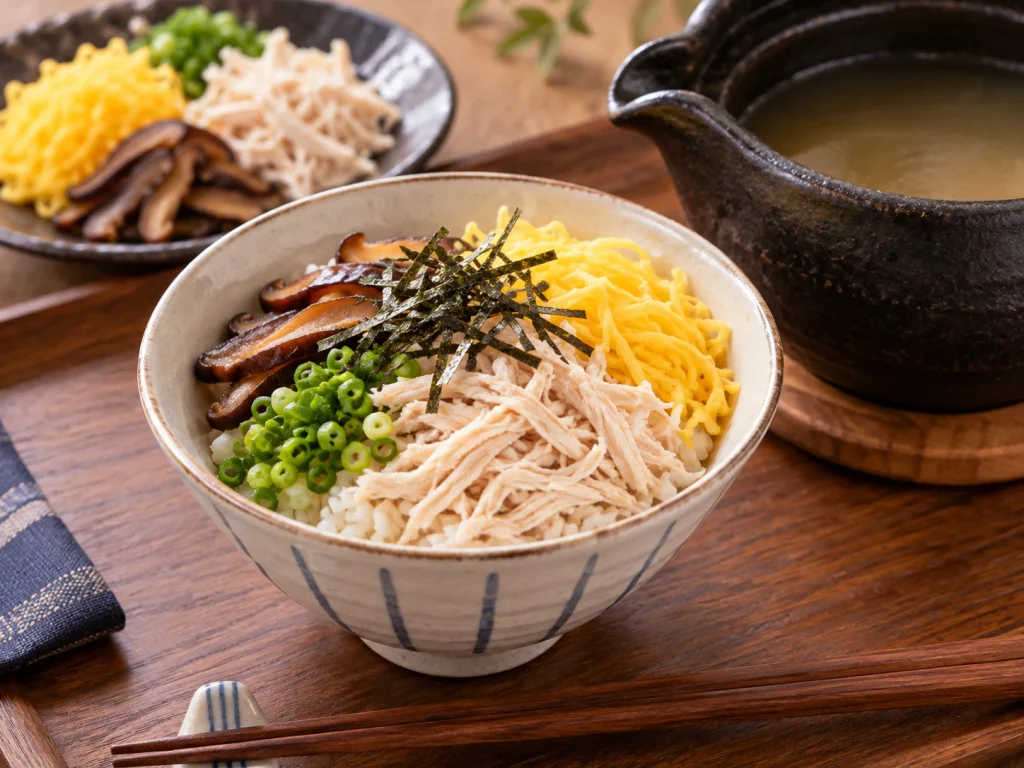
Its origins and how to eat it are covered in this article:
Keihan, Amami Oshima’s Chicken Rice with Broth: Five Stories Behind the Island’s Signature Dish
Abura somen (油そうめん)
A noodle dish of boiled somen stir-fried in oil with pork, vegetables and other ingredients, and finished with dashi stock. It is similar to Okinawa’s “somen champuru,” but the use of dashi is said to be the mark of Amami’s abura somen.
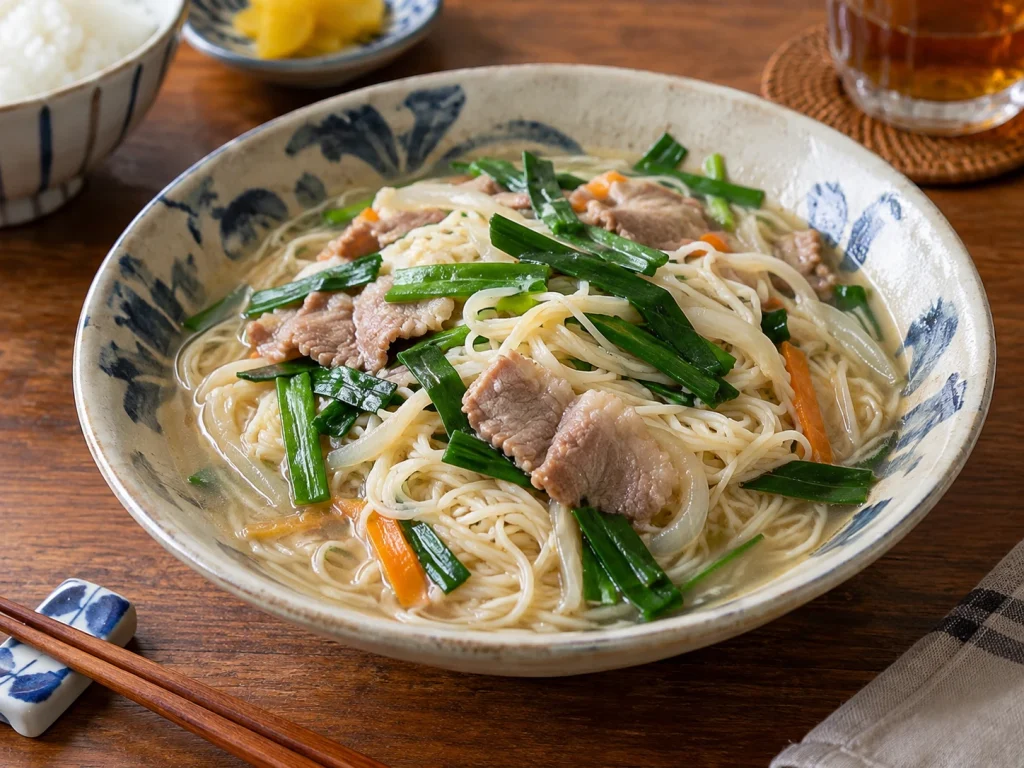
According to Kagoshima Prefecture’s materials on local cuisine, somen reached Amami in the late Edo period, and from the Meiji era on it became everyday food in ordinary homes. It was an essential dish for yuiwaku (ユイワク, communal work), the Obon holidays, and Arasetsu (アラセツ), an event in the eighth month of the lunar calendar praying for a good harvest. It is also said to have been eaten during breaks in hachigatsu odori (八月踊り), when people dance through the night from house to house in the village.
Recipes differ from home to home. Some bring out the flavor of iriko (dried sardine) stock, some use more meat, and some leave it a little soupy. At island izakaya, it sometimes appears on the menu as a dish to finish the evening.
Abura somen: origins and how to make it (in Japanese)
Miki (ミキ)
A white, thick fermented drink made from rice, sweet potato and other ingredients. It is sweet when freshly made and is described as gaining a yogurt-like sourness as fermentation goes on. It contains no alcohol.
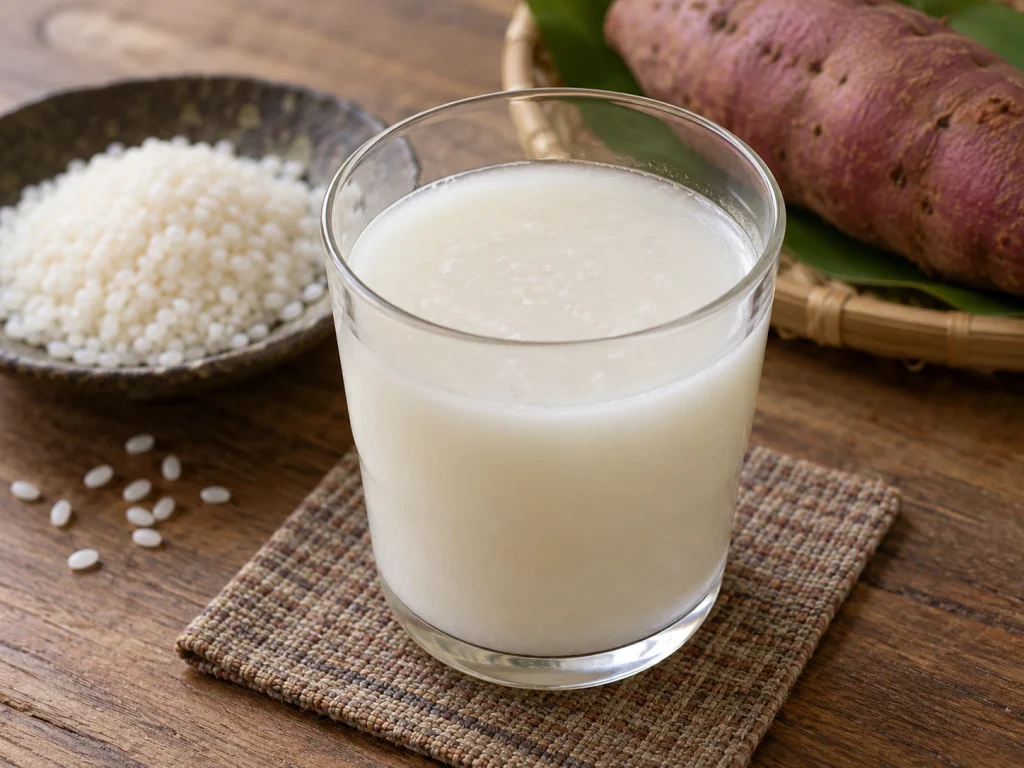
The name is said to come from “miki” (神酒), sacred offerings to the gods. According to Kagoshima Prefecture’s materials, since the days of Ryukyu rule miki has been an essential offering at the rites of the noro (ノロ), women priests who prayed for the peace and prosperity of the village. On Amami Oshima, it has been made for the harvest festival in the eighth month and village festivals on the ninth day of the ninth lunar month. The method also appears in the Nanto Zatsuwa (南島雑話) by Nagoshi Sagenta (名越左源太), a Satsuma samurai who lived on Amami at the end of the Edo period.
Fewer homes make it now, but there are about ten makers on the island, and it is sold in cartons. Besides drinking it as it is, suggested ways to enjoy it include mixing it with juice or milk, or adding fruit to make something like a dessert.
Miki: origins, taste, how to drink it and where to buy it (in Japanese)
Food for festivals and New Year’s Eve
Pork bones and vegetables: wanfune (豚骨野菜, ワンフネ)
Pork on the bone simmered in a large pot with tsuwabuki (ツワブキ, an edible wild plant), kelp, daikon radish, carrot, koshaman (コシャマン, a local variety of potato) and other vegetables. In the Amami language it is “uanfineyasse” (ウァンフィネヤッセ): “uan” means pig, “fine” bone and “yasse” vegetables. Island shops and tourism websites also call it “wanfune” or “wanbone” (ワン骨).
It is the dish families eat together on New Year’s Eve (toshiyunu, トシユヌ) to see out the year. The seasoning differs from home to home: mainly soy sauce, salt only, or sweetened with brown sugar. The custom of making it on New Year’s Eve continues today, and at the end of the year salted pork on the bone is said to appear in the shops. On the other hand, some younger households no longer make it, and an island NPO runs classes to pass the taste on.
Sangon (三献)
After seeing out the year with this pork dish, people welcome the new year on New Year’s Day with sangon. Sangon is a ceremonial meal essential for New Year and other celebrations. The first tray is a clear soup with mochi rice cake, the second is sashimi and the third is a clear pork soup, with shochu served between each tray.
The island and the pig
On Amami, each household once kept black island pigs (島豚) as a precious source of protein. Nothing was wasted: besides the New Year’s Eve dish above, the pork was made into pork miso and salted for keeping. The culture of eating pork is also said to reflect Chinese influence that arrived by way of Ryukyu.
Simmered pig’s feet are another example. The usual version is described as a simple one, cooked until falling apart and seasoned with salt. It is eaten at Obon, over New Year and at celebrations.
Good with rice
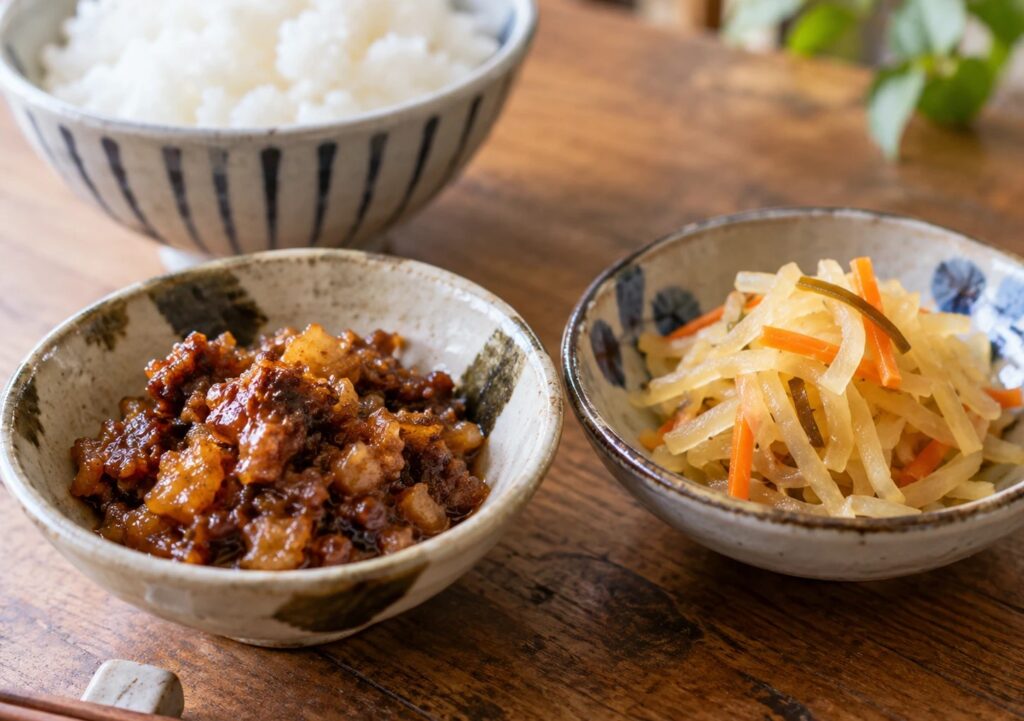
Pork miso (豚みそ)
A sweet and savory miso made with pork. On Amami Oshima, it is eaten as a snack with tea and as a side dish with rice.
Pickled papaya (パパイヤの漬物)
Papaya pickled while still green. It is used as a keihan topping and eaten with rice. Besides salt pickles, there are miso pickles, soy sauce pickles and spicy pickles.
On Amami, papaya is called “manjumai” (マンジュマイ) or “mokkwa” (モックヮ). Sources differ on how long it has been eaten here. Kagoshima Prefecture’s materials say it was already being eaten as a vegetable around the end of the Edo period, while a tourism website says it was brought from America and helped people through the food shortages after the war.
Island flavors at the izakaya
Tobinnya (トビンニャ, strawberry conch)
A spiral shellfish known on the island as tobinnya. Its name is said to come from the way it moves, hopping through the sea on a saw-like claw. It is usually boiled in salt water, is often served as an izakaya starter, and is a familiar companion to kokuto shochu.
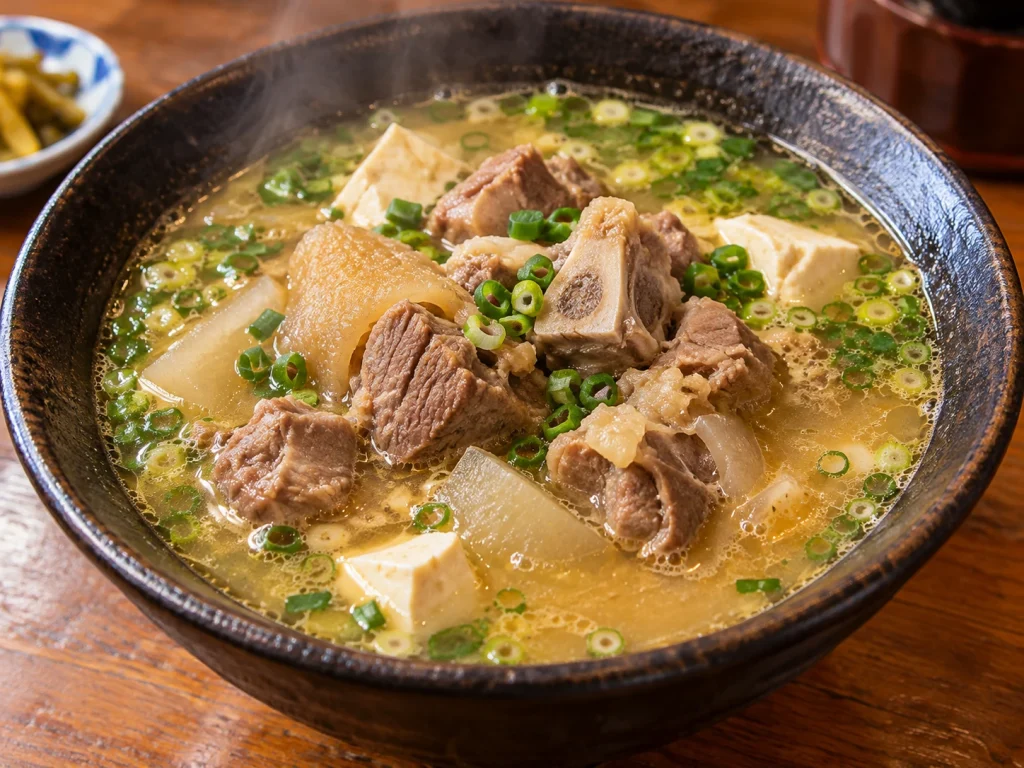
Goat soup (山羊汁, yagijiru)
A soup of chopped goat meat and bones simmered with miso or other seasonings. It is said to date from the days when many homes kept goats for food, and it has long been enjoyed as a dish for stamina. Besides miso, there is also a salt version. Goat meat has a distinctive flavor, and some places serve it with the strong taste toned down.
Squid ink soup (ミズイカのマダ汁, mada-jiru)
A black soup made with the ink of mizuika (ミズイカ, bigfin reef squid). On Amami, squid ink is called “mada.” Pork and squid are simmered, seasoned with miso and finished with the ink.
Island fish (島ぃゆ) and night-glow turban shell
At fish restaurants on Amami, you may find island fish listed under their island names. For example, aodai (アオダイ) is “ungyarumatsu” (ウンギャルマツ), hamadai (ハマダイ) is “akamatsu” (アカマツ), sumagatsuo (スマガツオ) is “ubusu” (ウブス) and akahata (アカハタ) is “nebari” (ネバリ). If you see one on a menu, asking what kind of fish it is can be part of the fun.
Yakogai (ヤコウガイ, night-glow turban shell), a large spiral shellfish, is served as sashimi or grilled with butter. Different parts are said to have different textures.
Recently, some restaurants also serve “ungyaru-don” (ウンギャル丼) as “keihan of the sea”: slices of aodai and mozuku seaweed tempura on rice, with stock made from the fish bones poured over.
Drinks and sweets
Kokuto and kokuto shochu (黒糖, 黒糖焼酎)
Kokuto, a brown sugar made the old way by pressing sugarcane and boiling down the juice in a cauldron over direct heat, is known for its distinctive flavor and aroma.
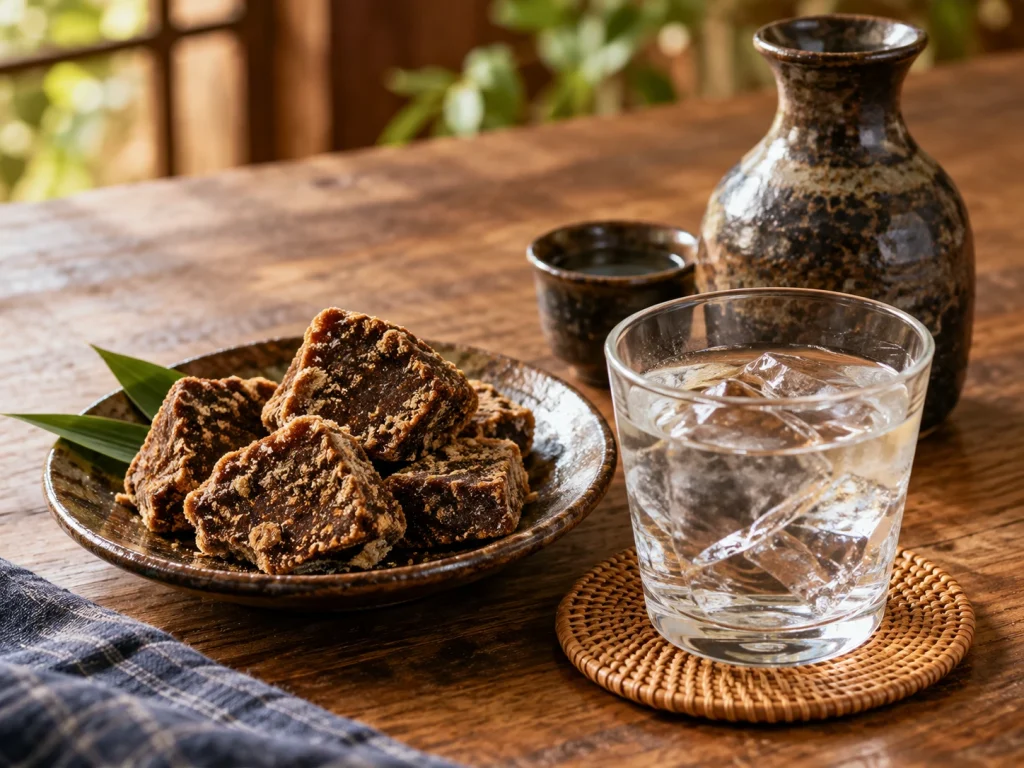
Kokuto shochu is the distilled spirit made with that kokuto. It is said to have begun when a shortage of rice during World War II led brewers to use local kokuto. After the Amami Islands returned to Japan in 1953, making shochu with kokuto was allowed only in the Amami Islands, and it is still made at 25 breweries there (10 of them on Amami Oshima). It is traditionally drunk with room-temperature water, and lately on the rocks and with soda as well.
Kasha mochi (かしゃもち)
Mugwort rice cake, also known as “futtsu mochi” (ふっつもち), “futsimuchi” (フツィムチ) or “fuchidaku” (フチダク). Mugwort and mochi are combined, wrapped in kasha (カシャ, shell ginger) leaves and steamed.
Funayaki (舟焼き)
A sweet made from a batter of hattaiko (はったい粉, barley flour), glutinous rice flour, eggs, brown sugar and other ingredients. It is cooked in a frying pan, rolled up like a crepe and cut on the diagonal. It is said to have spread from the Kasari (笠利) area in northern Amami, and the name is also said to come from the way the cut end looks like a traditional “itatsuke-bune” (板付舟) boat.
Tips for tasting these on your trip
- Keihan at lunchtime: there are keihan specialty restaurants, and places that serve keihan at lunchtime and run as an izakaya in the evening. Popular restaurants may close early when the broth runs out
- Island dishes at izakaya in the evening: abura somen, tobinnya, goat soup and island fish are often on the menu at izakaya serving island food
- Miki in cartons: look for the cartons made by island makers
- If you visit at the end of the year: salted pork on the bone in the shops is a sight special to the days before New Year’s Eve, when the pork and vegetable dish is made
- Hours and menus change: if there is a dish you want to try, it is safest to check with the restaurant in advance
Tied to island life
The soul food of Amami Oshima is not only keihan. Abura somen handed down in homes and at events, miki that was once an offering at rites, pork and vegetables for New Year’s Eve and sangon for New Year’s Day, pork miso and pickled papaya to go with rice, and the island’s fish and shellfish at the izakaya. All of these are tied to island life and its events.
Knowing when they are eaten and what they are called should make choosing a meal on the island a little more fun.
Sources
(Pages checked on October 8, 2026. Sources are in Japanese unless noted.)
- Kagoshima Prefecture, booklet on local cuisine (PDF): keihan, abura somen, pork miso, pork and vegetables, squid ink soup, sangon, pickled papaya, kasha mochi, miki, kokuto https://www.pref.kagoshima.jp/ag01/sangyo-rodo/nogyo/syokuiku/aji/documents/51276_20160420132802-1.pdf
- Ministry of Agriculture, Forestry and Fisheries, “Our Regional Cuisines: Pork and Vegetables, Kagoshima”: meaning of the name, sangon, island pigs, year-end shops, efforts to pass it on https://www.maff.go.jp/j/keikaku/syokubunka/k_ryouri/search_menu/menu/butahoneyasai_kagoshima.html
- Ministry of Agriculture, Forestry and Fisheries, “Nippon Traditional Foods: Miki”: origins, festivals, Nanto Zatsuwa, makers, ways of drinking https://www.maff.go.jp/j/keikaku/syokubunka/traditional-foods/menu/miki.html
- Japan Tourism Agency, multilingual commentary database, “Brown Sugar Shochu” (Amami Oshima Tourism and Products Federation, fiscal 2020) https://www.mlit.go.jp/tagengo-db/R2-00860.html
- Japan Tourism Agency, multilingual commentary database, “Food and Drink” (in English, same federation) https://www.mlit.go.jp/tagengo-db/en/R2-00863.html
- World Natural Heritage Amami-Okinawa, “Food of Amami Oshima”: tobinnya, kokuto shochu https://amamiokinawa.jp/amami_food/
- Nisshin OilliO, regional oil travelogue no. 36, “Abura Somen”: features of abura somen, hachigatsu odori https://www.nisshin-oillio.com/report/kikou/vol36.html
- Amami Tours, “Soul food: 10 local dishes”: abura somen, goat soup, pig’s feet, wanfune, pickled papaya, tobinnya, miki, funayaki https://amami-tour.com/column/amami-gourmet
- J-AIR, destination information, “Amami Oshima specialties”: keihan and miki introduced as “soul” food https://www.jair.co.jp/area/amamioshima/local_specialty/
- Amami Gyosho, menu: island fish names, night-glow turban shell, ungyaru-don https://amamigyosho.com/menu/
- Shima no Izakaya Muchakana, menu: wanbone, goat soup (salt and miso), night-glow turban shell https://www.muchakana.com/course/menu
- Amamiru, “Torishin”: a restaurant serving keihan at lunchtime and running as an izakaya in the evening https://amamiru.jp/gourmet/torishin/
- villa tumugu, “To Hisakura”: a restaurant that closes early when the broth runs out https://www.tumugu-amami.com/post/keihan_hisakura
- Wakadaisho Amami (official): abura somen as “soul food” and a dish to finish the evening https://wakadaisyo.owst.jp/


Comments